Home / Count Zero
William Gibson
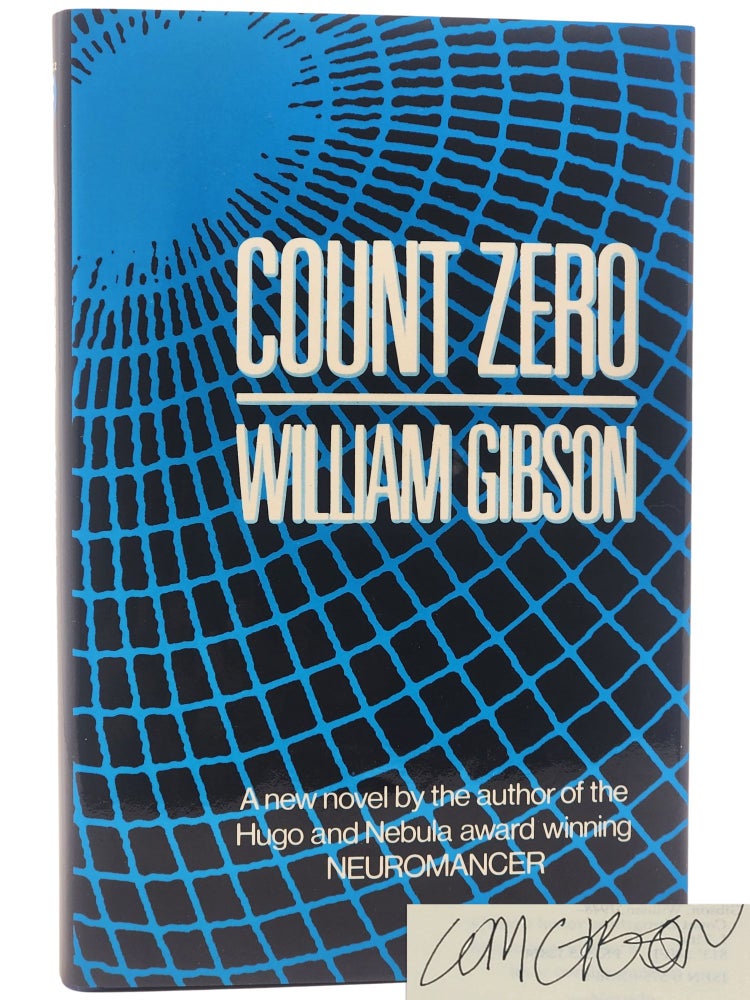
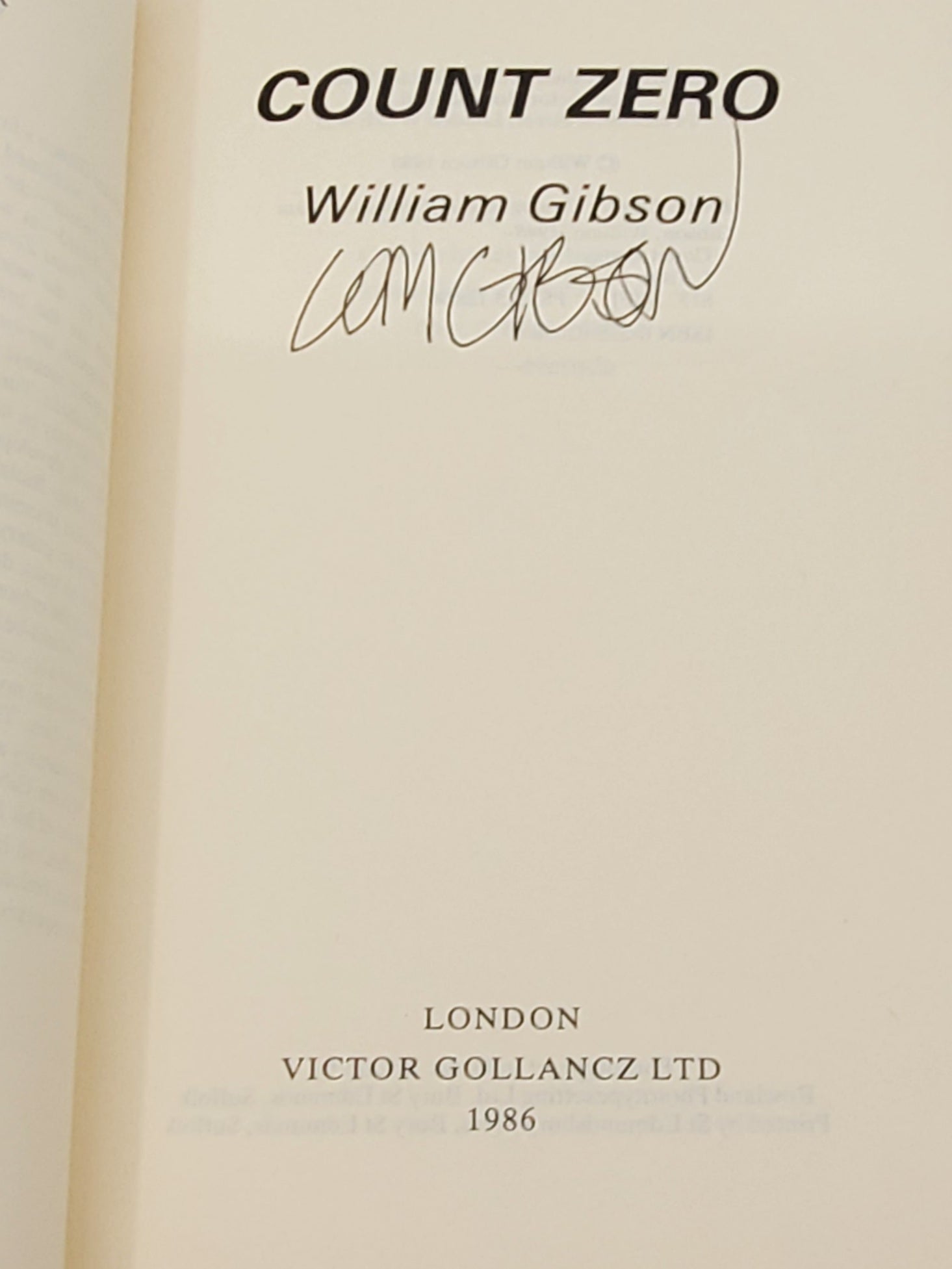
Signed

Count Zero

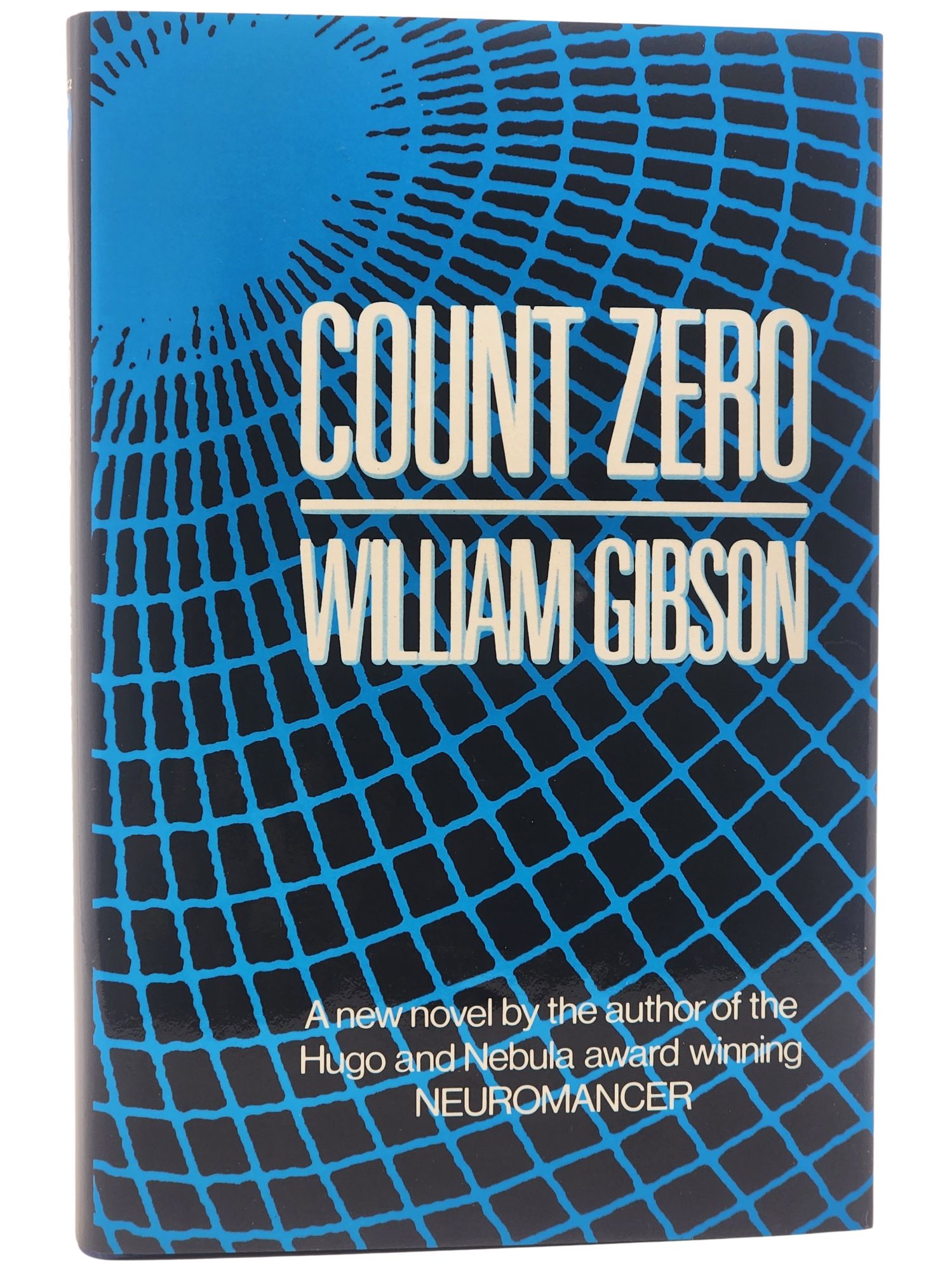
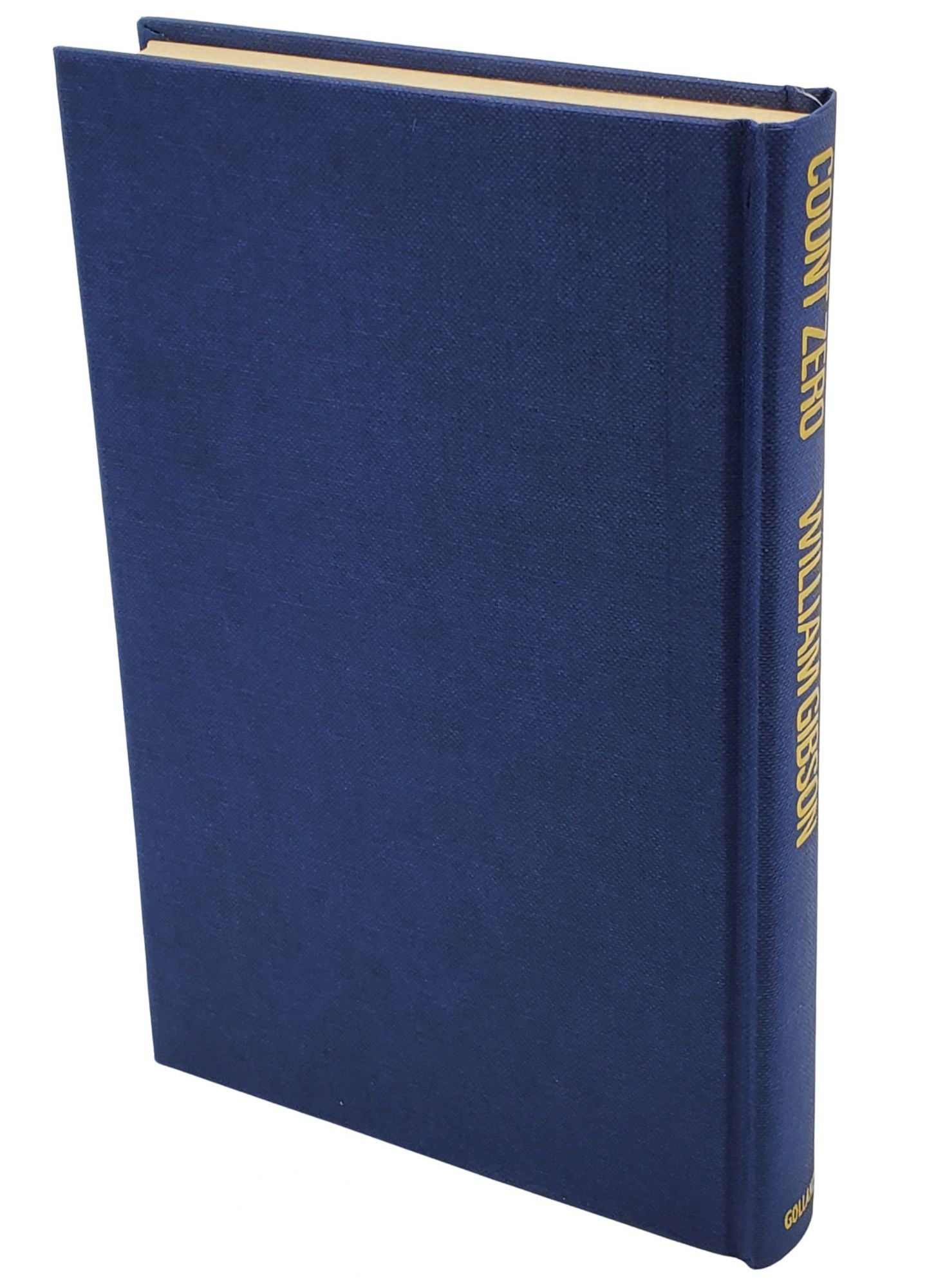
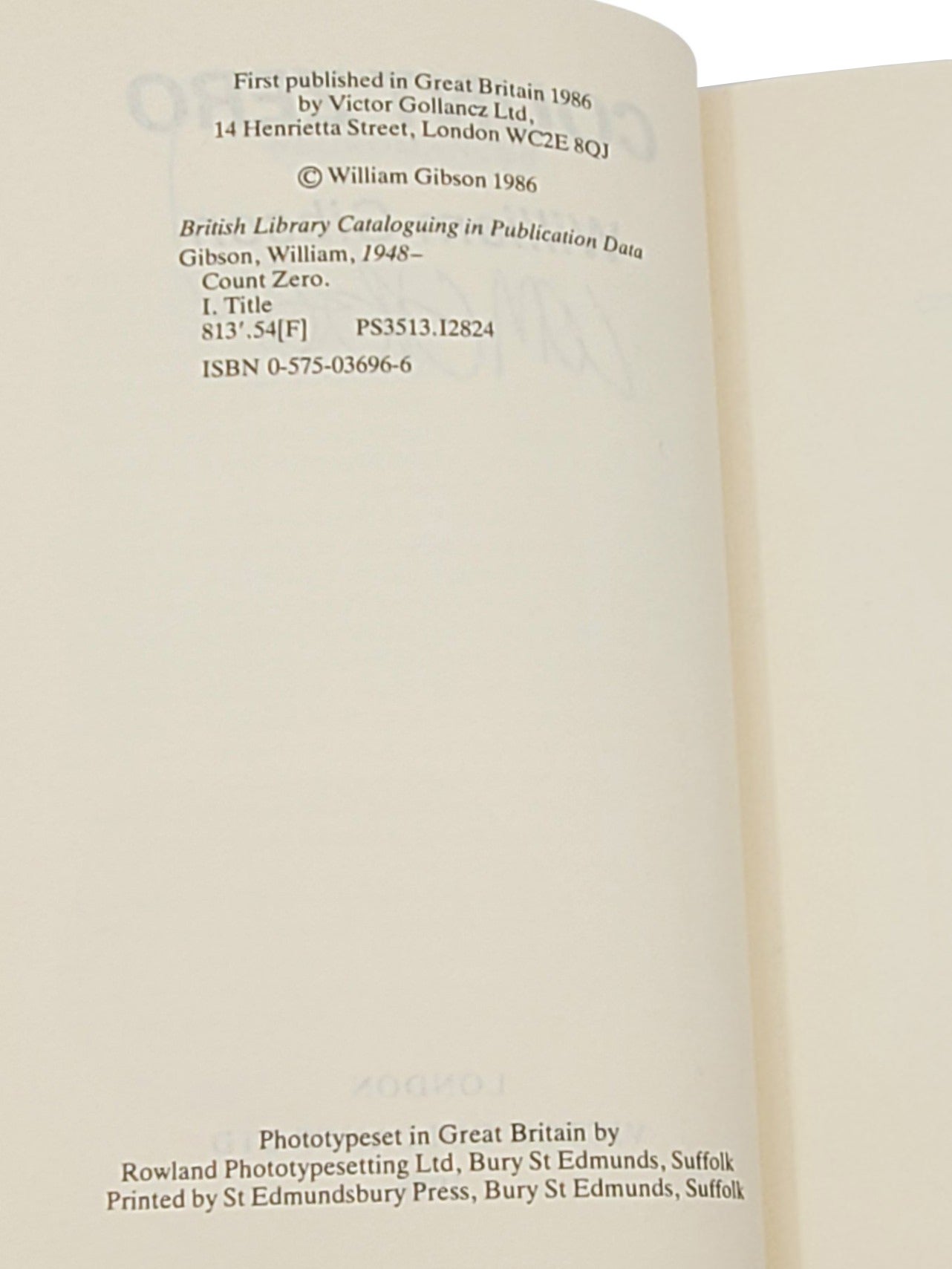
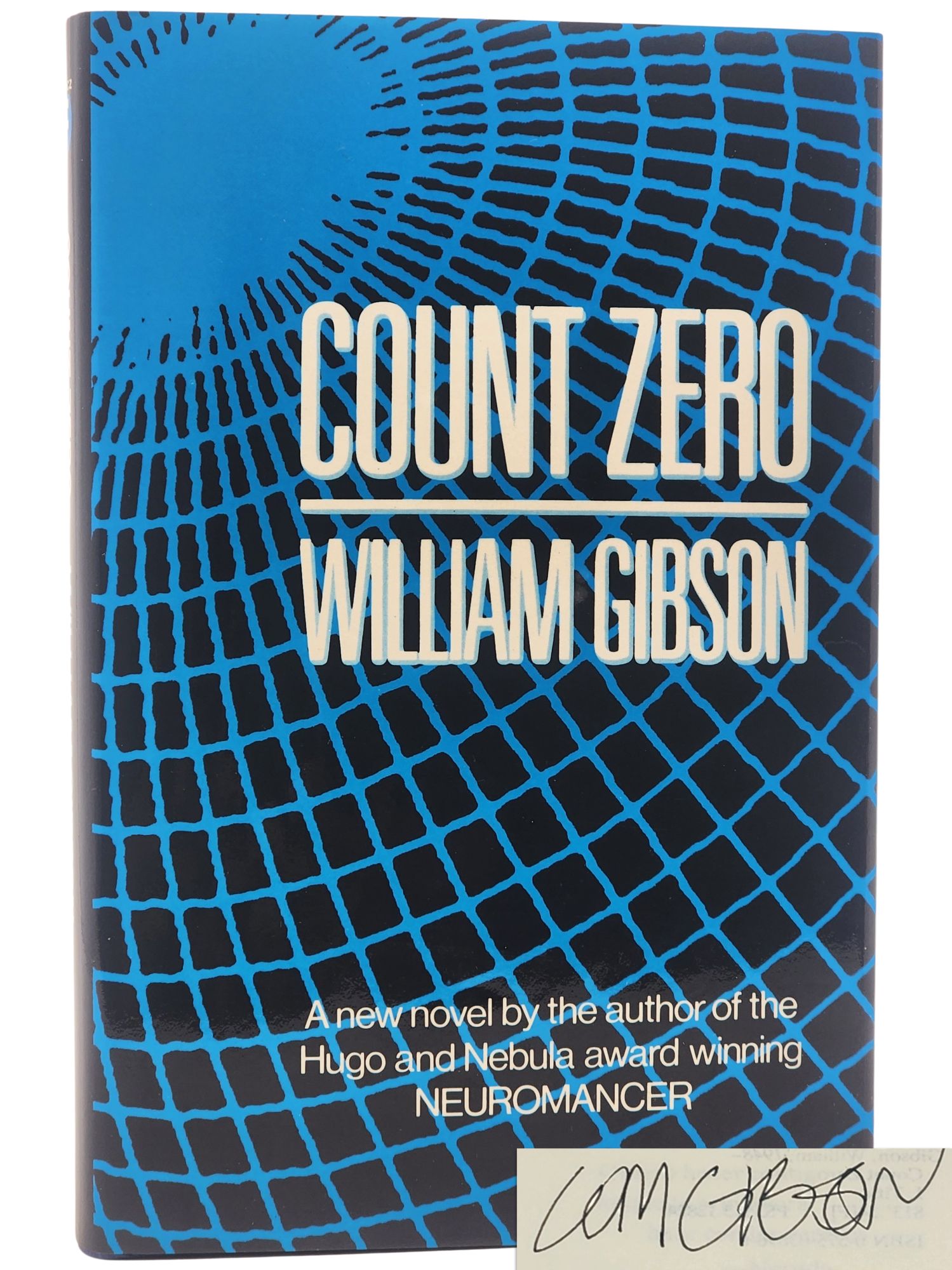
Signed British first edition, 1986
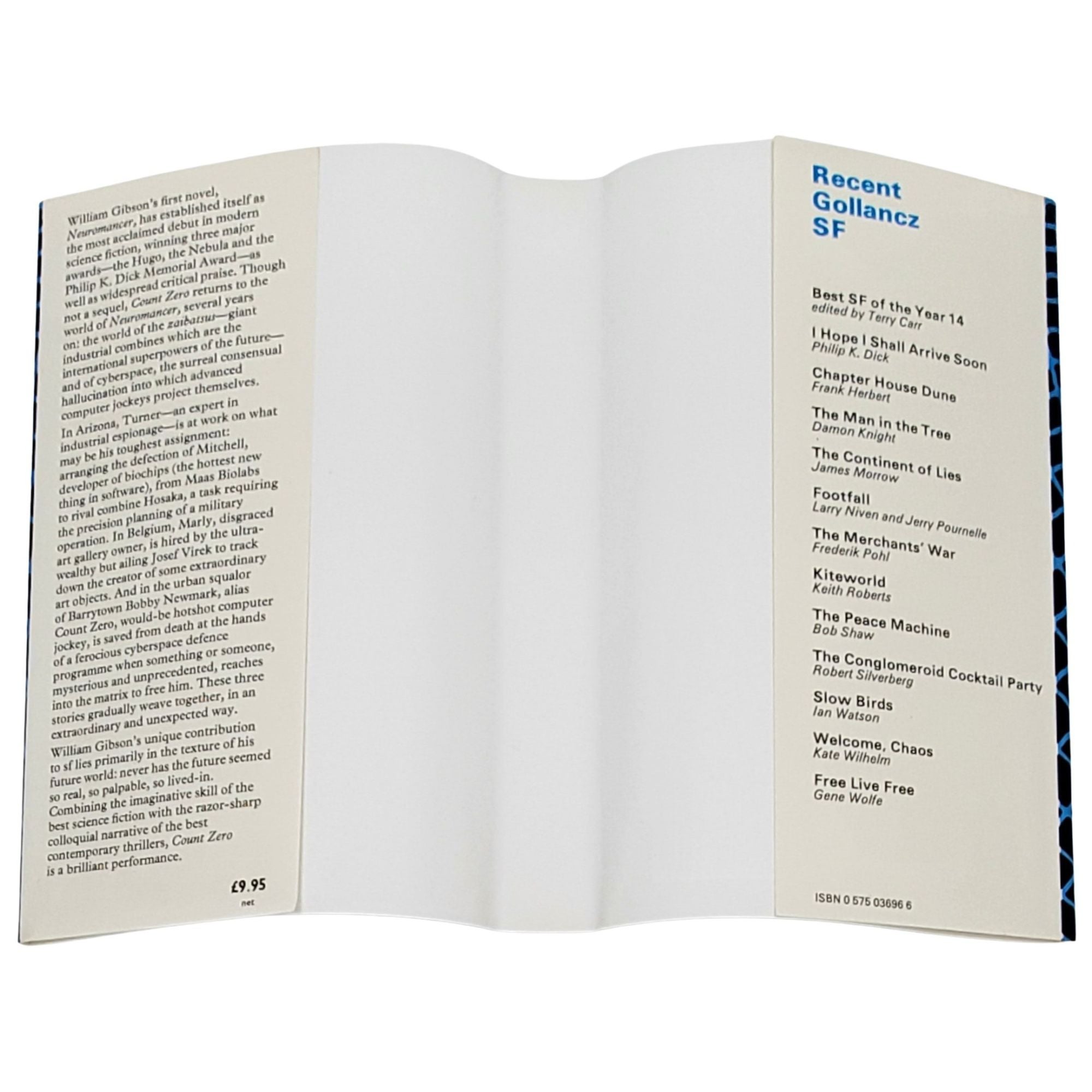
Count Zero (1986) is the second novel in William Gibson’s Sprawl Trilogy, set several years after Neuromancer and expanding its vision of a world shaped by corporate power, data networks, and emerging artificial intelligences. The narrative unfolds through three intersecting perspectives: Turner, a veteran corporate mercenary specializing in high-risk extractions; Bobby Newmark, a novice hacker known online as “Count Zero,” whose first serious intrusion draws the attention of forces far beyond his understanding; and Marly Krushkhova, a disgraced gallery owner hired by a reclusive industrialist to locate the creator of a series of enigmatic artworks linked to cyberspace.

As these storylines converge, Gibson moves away from the outlaw mythology of hackers and toward the corporate systems that shape the Sprawl, including logistics, surveillance, and control. Cyberspace is no longer a frontier but an operating environment that drives markets and larger technological systems. First published by Victor Gollancz, this first edition precedes all other editions.

Signed copy. Signed by Gibson on the title page.


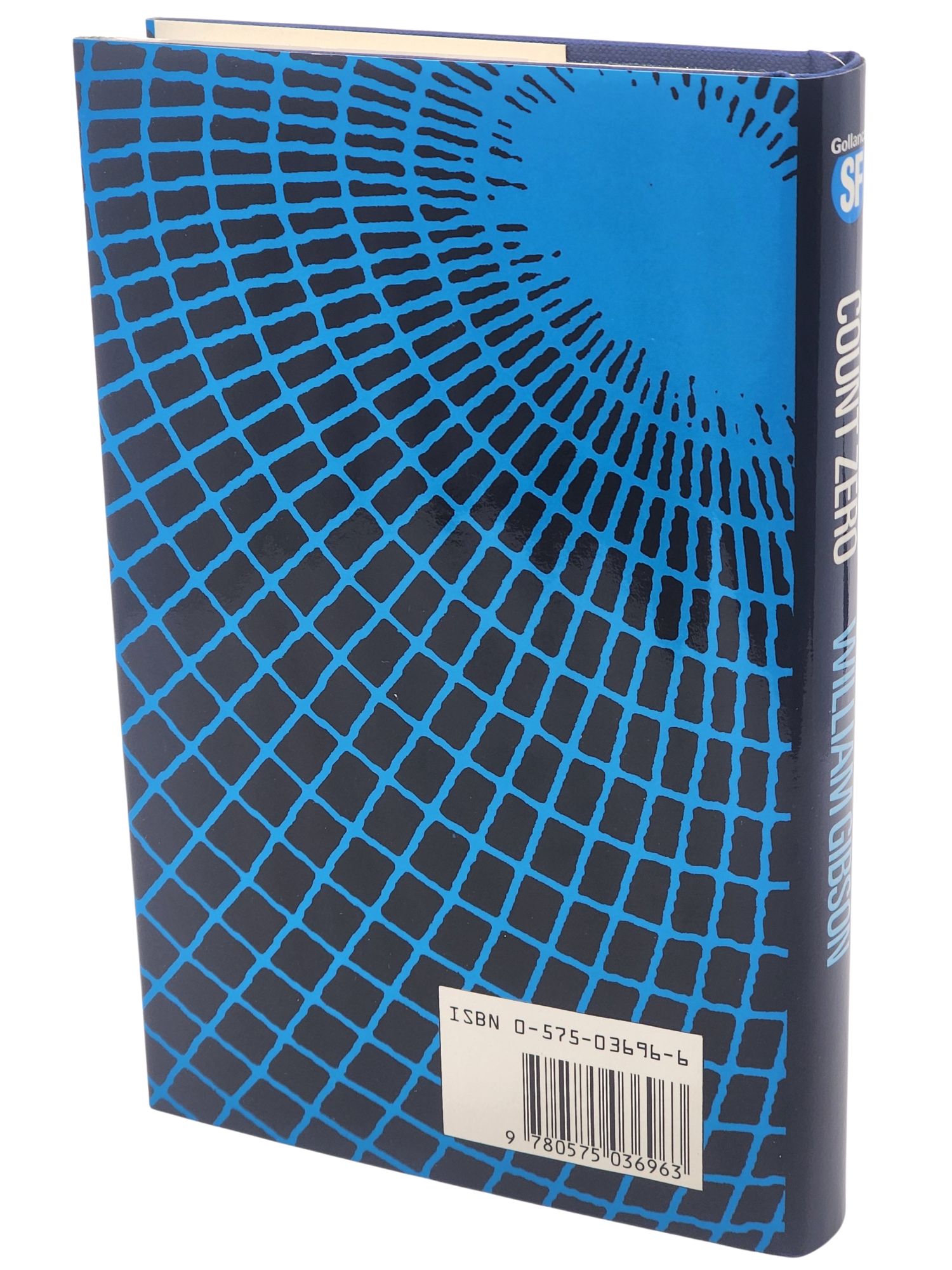
Hardcover. First Edition, First Printing. Octavo, bound in paper covered boards. London: Gollancz, 1986. Nebula Award winner (1986). British Science Fiction Award winner (1986). Hugo Award nominee (1987). Locus Award nominee (1987). ISBN: 0575036966. #10164.
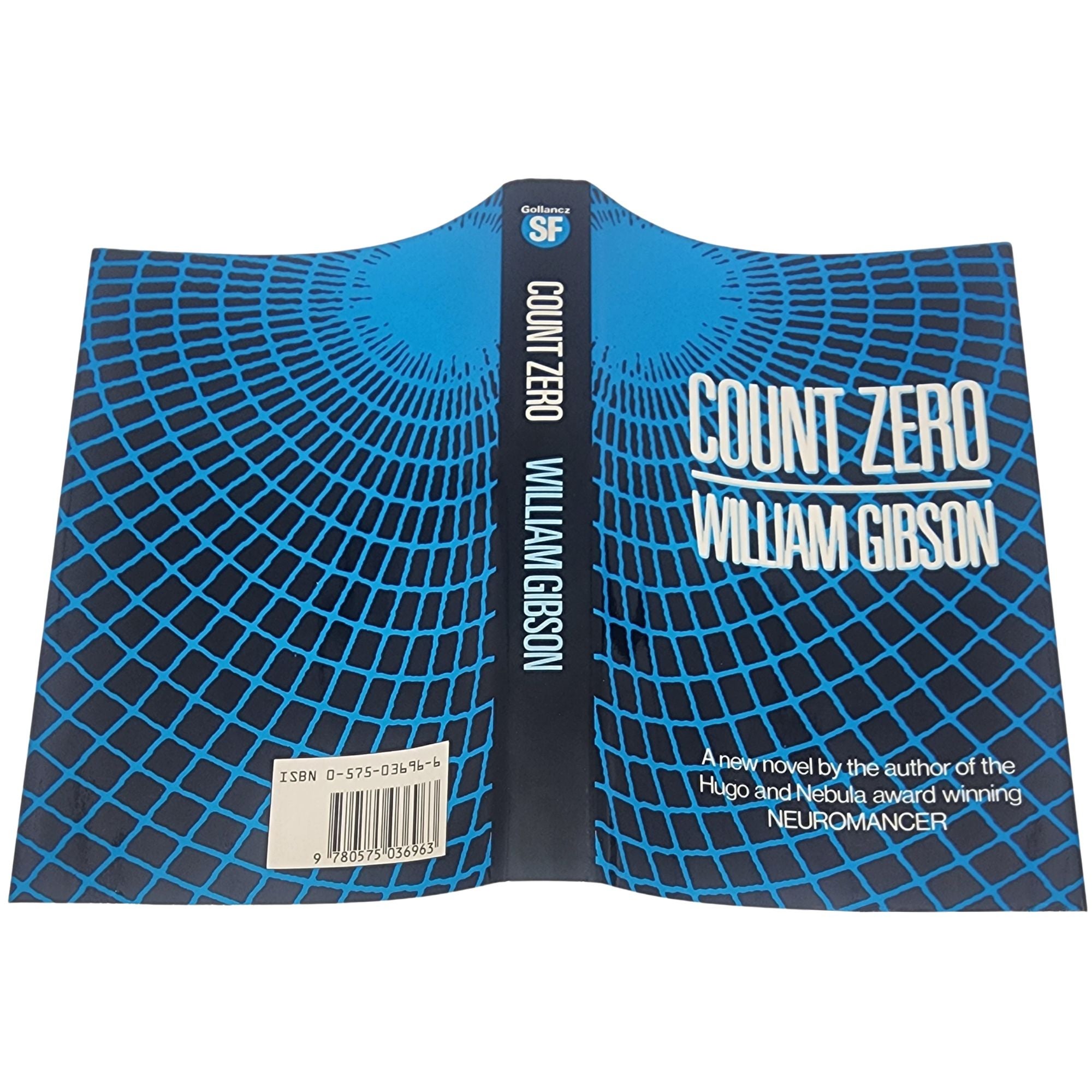
Fine in fine dust jacket.
Additional Details
Count Zero (1986) is the second novel in the Sprawl Trilogy, set several years after Neuromancer in a world where the technologies that once felt new and dangerous have become the operating infrastructure of everyday corporate life. The novel unfolds through three separate storylines that gradually converge.

Turner is a corporate mercenary whose body has been destroyed and rebuilt multiple times in the service of high-risk extractions. The novel opens with his reconstruction after a bomb in New Delhi. In this world, violence is a professional service, bodies are hardware, and loyalty is contractual. His current job is to extract Mitchell, a biochip researcher from Maas Biolabs, a corporation sitting on patents that could reshape the industry. Bobby Newmark, known online as Count Zero, is a teenage hacker from Barrytown who attempts his first serious matrix intrusion and nearly dies, saved at the last moment by something in cyberspace that should not exist. Josef Virek is a terminally ill industrialist of such vast wealth that he experiences the world only through technological mediation. He has hired Marly Krushkhova, a disgraced Paris gallerist, to locate the maker of a series of enigmatic box assemblages that have been appearing from inside the matrix.

The box assemblages are the novel's most striking invention. They are beautiful, cryptic, and inexplicable by the logic of the Sprawl's corporate economy. Marly's thread is the quietest of the three but in some ways the most interesting, because it treats art and perception as things the system cannot fully account for or absorb. Virek can buy almost anything, but he cannot manufacture the response Marly has to the boxes, and that is where the novel does its most original thinking.

Where Neuromancer emphasized dislocation and sensory overload, Count Zero depicts a world that has grown more settled and more controlled. Corporate power is no longer disruptive but ambient, shaping work, movement, and creativity as a background condition. The Sprawl feels less like a frontier and more like a machine that runs regardless of who passes through it. What has changed since Neuromancer, in ways neither the characters nor the reader immediately understand, is what is happening inside cyberspace itself.